Women's health: The conditions Black women are told to live with
By Dr Aziza Sesay · Module content by Dr Sharon Akinola
9 min read
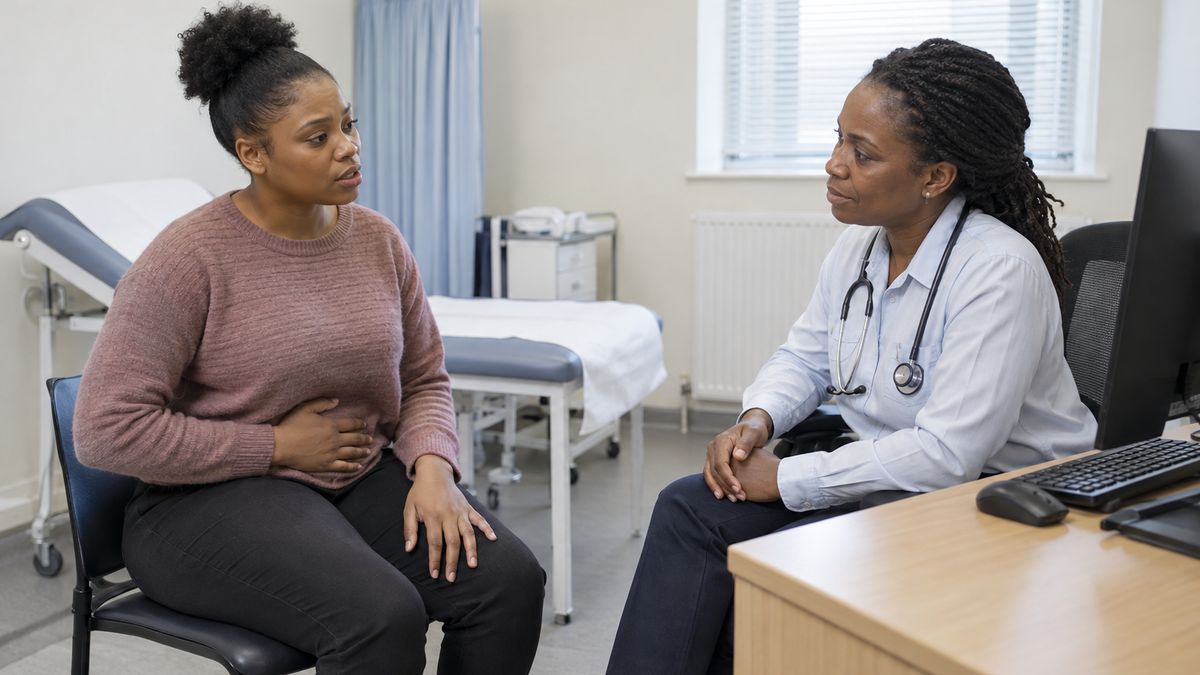
In short: Fibroids, endometriosis, PMOS (formerly PCOS) and infertility affect Black women more often or more severely, yet their symptoms are frequently dismissed. Painful or very heavy periods are not normal: keep a symptom diary, ask about these conditions by name, and seek a second opinion if you are not being heard.
Key takeaways
- By 50, more than 80% of Black women have fibroids, compared with nearly 70% of white women, and Black women develop them younger.
- Endometriosis takes over nine years to diagnose on average in the UK, and around 11 years for women from ethnically diverse communities.
- PCOS was renamed polyendocrine metabolic ovarian syndrome (PMOS) in 2026; the diagnosis and treatment have not changed.
- Black women tend to reach menopause earlier, so perimenopause can start sooner than many clinicians expect.
As Black women, we face unique reproductive health challenges, and they create real disparities. Fibroids, PMOS (formerly PCOS), endometriosis and infertility all affect us disproportionately, and too often we are expected to simply get on with it. This piece, based on research brought together by Dr Sharon Akinola, walks through each condition, how it affects Black women differently, and how you can advocate for yourself. Reproductive health equity is essential, and it is possible.
Endometriosis: pain that is not normal
Endometriosis affects around 10% of women, and probably many more, because it is underdiagnosed and misdiagnosed. In the UK it now takes an average of 9 years and 4 months to be diagnosed.
The inner lining of the womb is called the endometrium. It thickens and sheds through the menstrual cycle. In endometriosis, tissue very similar to that lining grows outside the womb: on the fallopian tubes, the ovaries, the bladder, the bowel, and occasionally as far away as the lungs. It is a chronic condition, and it can cause:
- Severe pelvic pain
- Irregular or very painful periods
- Painful sex
- Bladder symptoms, such as pain or needing to pass urine often, and sometimes blood in the urine
- Bowel symptoms, such as constipation or pain when opening your bowels
Like the womb lining, this tissue responds to hormones, thickening and shedding. But unlike the lining, it has nowhere to go, so it causes scarring (adhesions) and cysts. If it blocks the fallopian tubes, the egg cannot meet the sperm, which is one of the ways endometriosis affects fertility.
It is not supposed to be this way. You are not supposed to have excruciating periods and just get on with it. That needs to be checked, and it could be endometriosis.
For women from ethnically diverse communities in the UK, the average wait is around 11 years, and research suggests Black women are about half as likely as white women to be diagnosed at all. There is also a misconception that endometriosis is rare in women of African heritage, when it may simply be that Black women are not listened to. That belief delays diagnosis, limits treatment and discourages research.
Treatment can include pain relief, from anti-inflammatories through to stronger painkillers when pain is severe, and hormonal treatments such as the combined pill, the progesterone-only pill or a hormonal coil. Scans such as ultrasound or MRI are often used first, and laparoscopy (keyhole surgery) can confirm the diagnosis and remove tissue at the same time. But if nothing is seen, it does not mean you do not have endometriosis, and you should still be managed appropriately. Lifestyle changes help, and assisted reproduction such as IVF may be an option.
PMOS (formerly PCOS): more than a weight problem
Polyendocrine metabolic ovarian syndrome (PMOS), until recently called polycystic ovary syndrome (PCOS), is a hormonal and metabolic condition that disrupts how the ovaries work, so eggs are not released regularly. The old name was misleading, because you do not need multiple cysts to be diagnosed, which is one reason it was changed in 2026. You need two of these three:
- Irregular periods
- Raised male hormones, or signs of them such as acne and hirsutism (thick hair on the chin, face, chest or back)
- Multiple cysts on the ovaries
PMOS tends to be more severe in Black women, with worse hirsutism, more insulin resistance, more difficulty losing weight, and higher cardiovascular risk. It is linked to metabolic syndrome, a cluster of high blood sugar, high cholesterol and obesity that can lead to serious complications and early death. That is why prevention and proper management matter so much for us.
Yet Black women with PMOS often face dismissal and weight stigma. Their symptoms are put down to being overweight, and they are given weight-focused advice instead of the treatment that exists. There is no cure, but there are treatments. And because our symptoms are often worse, PMOS takes a heavy toll on body image and mental health, which becomes a vicious circle.
Perimenopause and menopause: we are not too young
Menopause is when your periods have stopped for 12 consecutive months. Perimenopause is the time leading up to it, and it can last several years, with very similar symptoms.
Black women tend to reach menopause earlier, and our perimenopausal symptoms are often more intense, last longer and can get worse over time. Too often we do not receive adequate hormone treatment, partly because our symptoms are not recognised as perimenopause. We are told we are too young. We are not.
Providers' lack of awareness leads to dismissal in appointments. Historical mistrust also affects whether Black women choose hormone replacement therapy, the first-line treatment. Both have to change: we need to raise awareness that perimenopause is real and often harder for us, and we need to build trust.
Fibroids: common, but not something to ignore
Fibroids are benign growths in the muscle layer of the womb. By the age of 50, most women will have developed them, although many are small and cause no symptoms. Black women are affected much more: we are diagnosed younger, we have more and bigger fibroids, and our symptoms are worse. In one large US study, more than 80% of Black women had fibroids by 50, compared with nearly 70% of white women.
About half of women with fibroids have no symptoms. Others experience heavy or painful periods, needing to pass urine often, constipation, bloating, or an abdomen so swollen that they look pregnant.
Why are we more affected? Suggested factors include starting periods earlier, obesity, stress, low vitamin D and genetics, but we do not know for sure. Outside cancer, only around 1% of new medicines in development target women's health conditions. That has to change.
Treatment options include:
- Hormonal therapy, such as the pill or a hormonal coil
- Uterine fibroid embolisation (UFE), which blocks the fibroid's blood supply
- Endometrial ablation, to reduce heavy bleeding
- Myomectomy, which removes the fibroids and keeps the womb
- Hysterectomy, which removes the womb
- MRI-guided high-intensity focused ultrasound, available only in some specialist centres
- Complementary approaches such as acupuncture, herbal supplements and dietary changes, which some women try, although there is little evidence that they shrink fibroids, so talk to your doctor first
Infertility: twice as likely, and too often silent
US research has found that Black women are around twice as likely as white women to experience infertility, and this gap is not fully explained by fibroids or other known risk factors. Many barriers keep us from getting help: cultural stigma that means we come forward late, lack of awareness, cost and access, too few Black sperm and egg donors, healthcare bias, and the discomfort of fertility clinics that are predominantly white settings.
How we change the narrative
If you have read this far, you now know these disparities exist. Here is what will make a difference:
- Share the knowledge. Keep educating and raising awareness.
- Build community support. Safe spaces where we can talk, feel seen and share what has helped.
- Improve access to care so services are easier for Black women to use.
- Culturally competent care. Believe us, listen to us, and stop dismissing us. A woman can have fibroids, endometriosis and adenomyosis at the same time, and each needs diagnosing and treating.
- Research and data that include us. Research has historically abused our trust, but safeguards today are far more robust. We need to come forward so we can find out why we are affected.
- Mental health support, because systemic racism and stress affect our health and can worsen our symptoms.
- Representation of Black healthcare professionals in leadership, campaigns and education.
- Better access to fertility services and patient advocacy groups.
You are the CEO of your body
Nobody knows your body better than you. If something feels wrong, do not let anyone dismiss you. Get a second, third or fourth opinion if you need to. Tell your doctor what you think is going on and what you would like done. If they disagree, ask calmly: why do you not think it is this? Why are you giving me this treatment? That is not being difficult. It is your right as a patient.
These conditions may not always kill, but they can stop people from living. Please share this with your family and friends. It could change someone's life.
Watch the original HEAL talk
Watch Dr Aziza Sesay's HEAL for Black People talk on YouTube (26:03)
Frequently asked questions
Yes. The NHS lists being from a Black background as a risk factor for fibroids. A large US ultrasound study found that by the age of 50, more than 80% of Black women had fibroids, compared with nearly 70% of white women. Black women also tend to develop them younger and have more severe symptoms, such as heavy bleeding.
According to Endometriosis UK, the average wait for a diagnosis in the UK is now 9 years and 4 months. People from ethnically diverse communities wait even longer, around 11 years on average. If you have painful periods that stop you living normally, ask your GP about endometriosis and keep a symptom diary.
Yes. In May 2026, an international consensus published in The Lancet renamed polycystic ovary syndrome as polyendocrine metabolic ovarian syndrome (PMOS), and the NHS now uses the new name. The condition and how it is diagnosed have not changed. The new name reflects that it is a hormonal and metabolic condition, not a problem of cysts.
No. That belief is a myth. Researchers at the University of Oxford report that Black women are about 50% less likely to be diagnosed with endometriosis than white women, which likely reflects pain being dismissed rather than the condition being rarer. If your periods are very painful, you deserve to be assessed properly, whatever your ethnicity.
- The State of Endometriosis Care in the UK: A Roadmap for Driving Change. Endometriosis UK, 2025 (survey Sept to Oct 2025)
- Disbelieved, dismissed, delayed: Endometriosis diagnosis inequalities in ethnically diverse communities. Cysters and Endometriosis UK, 23 March 2026 (summary on Patient Safety Learning hub)
- Endometriosis. NHS, last reviewed 27 August 2024
- Polyendocrine metabolic ovarian syndrome (PMOS). NHS, last reviewed 30 June 2026
- Fibroids. NHS, last reviewed 17 March 2026
- Baird DD et al. High cumulative incidence of uterine leiomyoma in black and white women: ultrasound evidence. American Journal of Obstetrics and Gynecology, 2003
- Wellons MF et al. Racial differences in self-reported infertility and risk factors for infertility in a cohort of black and white women: the CARDIA Women's Study. Fertility and Sterility, 2008
- Polyendocrine metabolic ovarian syndrome, the new name for polycystic ovary syndrome: a multistep global consensus process. The Lancet, May 2026
Read next in the HEAL series
All articles in the HEAL series Empower Her
Black women and menopause
Black women often reach menopause earlier and have symptoms for longer. A GP and British Menopause Society member explains symptoms, HRT and risks.
Dr Itunuoluwa Johnson-SogbetunVideo length 1:19:12 Maternal, perinatal and child health
Safer beginnings for Black mothers and children
Black women in the UK are 2.7 times more likely to die in pregnancy. A UK doctor explains why, plus infant health, vaccines and childhood asthma.
Dr Zaneta Forson-DareVideo length 13:12 Conclusion
From struggles to solutions
Practical steps to get heard in the NHS, plus the BRIGHT CARE framework for clinicians, from UK GP and health educator Dr Tosin Ajayi-Sotubo.
Dr Tosin Ajayi-SotuboVideo length 15:16