Maternal, perinatal and child health: Safer beginnings for Black mothers and children
By Dr Zaneta Forson-Dare · Module content by Dr Enioluwaduroti Johnson
9 min read
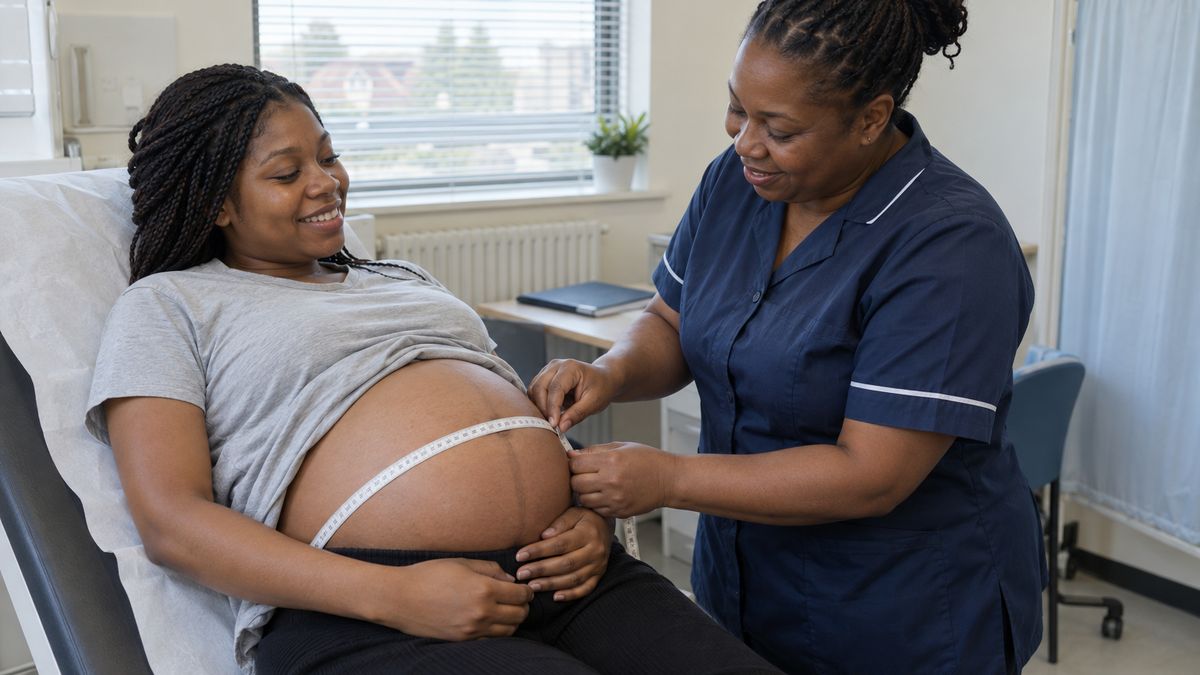
In short: Black women in the UK are 2.7 times more likely than white women to die during pregnancy or soon after, and Black babies are more than twice as likely to be stillborn. Racism, bias, missed antenatal care and deprivation all contribute, and income or education alone does not close the gap.
Key takeaways
- In the US, Black women with a university degree have a pregnancy-related death rate more than five times that of white graduates.
- Childhood vaccine hesitancy is rooted in real historical abuses, so listening must come before persuading.
- Asthma in Black children is closely linked to pollution, poor housing and damp.
- If something feels wrong in pregnancy, contact your midwife or maternity unit straight away and ask for an urgent review.
Black women disproportionately face challenges and disparities that affect their maternal health. Maternal mortality rates remain high in Africa, in the UK, in the USA and across the rest of the Black diaspora. In the UK, the latest national enquiry, MBRRACE-UK (2022 to 2024), found that Black women were 2.7 times more likely than white women to die during pregnancy or up to six weeks after giving birth. And these poor outcomes are driven not only by individual health but by societal and healthcare system factors.
One fact makes this especially clear. In the USA, even when you account for socioeconomic status and education, Black women still have higher rates of maternal death and serious illness than white women at the same income or education level. Black women with a university degree have a pregnancy-related death rate more than five times that of white women with a degree. Money and education alone do not protect us. In this piece I want to look at why, and then turn to the health of Black infants and children.
The challenges Black mothers face
Lack of access to prenatal care. This can be caused by financial problems, transport difficulties, or the distance to the nearest clinic or medical centre. The type of job someone does matters too: not every woman can take time off work, or afford the lost earnings and what that would mean for her family's financial security. In the United States, insurance and immigration status add further barriers.
Historical medical mistrust. The healthcare system exists within a wider society that has systemic racism, so it is affected by racism too, and that understandably leads to mistrust among Black patients. This has been deepened by a history of studies, tests and even treatments carried out on Black people, including Black women, without their consent. The Tuskegee syphilis study is one example among many.
Racism, racial bias, discrimination and implicit bias. These can lead to dismissive care from healthcare providers, delays in treatment, and a lower quality of care.
Socioeconomic issues. These feed into everything above. Financial pressure makes it harder for women to focus on their own health, and it reduces access to prenatal care, healthy food, exercise and rest.
A lack of culturally competent care. Care needs to be culturally humble as well as accessible if we are going to improve outcomes and support the behaviours that keep mothers and babies safe.
Why babies are dying: infant mortality
Infant mortality means a baby dying within the first year of life. The causes differ by setting.
In sub-Saharan Africa, some of the main causes are:
- Prematurity and the low birth weight that often goes with it
- Birth asphyxia, when a baby does not get enough oxygen around the time of birth
- Sepsis and other infections
- Complications in the mother, such as placental abruption or uterine rupture
Within the Black diaspora in the Western world, we see higher rates of low birth weight, congenital malformations, sudden infant death syndrome and accidental injuries, alongside higher rates of complications in mothers. Black infants are more vulnerable overall, partly because of lower birth weights, and Black mothers are less likely to receive prenatal care, or more likely to receive it late. Racism and racial bias also contribute to higher infant mortality among Black children compared with white children. In the UK, Black babies are more than twice as likely to be stillborn as white babies.
Childhood vaccine hesitancy: listening before persuading
I want to talk honestly about childhood vaccine hesitancy in the Black community. It is rooted in both historical and contemporary racism, marginalisation and neglect. Events such as the eugenics movement and the Tuskegee syphilis study deepened a medical mistrust that continues today.
That mistrust is multifaceted. There is mistrust of the healthcare system as it exists within society, mistrust of healthcare providers to give equitable care, mistrust of government to give safe and truthful information, and mistrust of the vaccine itself, whether it will be safe and effective for a child.
At the same time, childhood vaccines are one of the great public health successes worldwide. Many diseases, and the illness and deaths they caused, have been dramatically reduced because people are widely vaccinated. So while there are very justified reasons for hesitancy, education and promotion of vaccines are essential to stop health disparities getting worse.
The gap is real. In the US, children living below the poverty line have lower coverage for every routine childhood vaccine, and Black infants are still less likely than white infants to be fully vaccinated. In England, children from several minority ethnic groups, including Black Caribbean children, are less likely to be fully vaccinated than White British children. Closing that gap means:
- Identifying the barriers and addressing each one
- Partnering with trusted community voices to produce culturally appropriate materials
- Explaining and educating in a way that acknowledges people's real fears, which are rooted in things that truly happened
- Running community outreach programmes
- Offering vaccines in convenient locations to remove transport barriers
The childhood conditions that affect us more
Several childhood illnesses disproportionately affect Black children. Exposure to pollution is a key factor in asthma and allergies. There are higher rates of learning disabilities, which we must consider in the context of the education system, the quality of education children receive depending on where they live, and racism within education itself. And there are higher rates of obesity and type 2 diabetes, which are closely linked.
These disparities come from a complex interaction between genetics, the environment children live in, family history, the socioeconomic factors that shape every part of a child's life, and cultural factors.
Asthma: where a child lives matters
The main risk factors are family history and exposure to allergens. But environment plays a huge part.
Families on lower incomes are more likely to live near sources of pollution: close to industrial plants, near major roads with heavy traffic, or in older, high-rise buildings that may not be up to standard. In flats and apartments, families often have less control over the temperature and less ability to deal with pests, mould and dust. All of this means children from lower-income backgrounds are disproportionately exposed to toxins, which triggers a constant cycle of asthma and asthma attacks.
If your child has a cough, shortness of breath, or cannot keep up with their friends when exercising, please get them assessed promptly by a paediatrician or GP. Once asthma is diagnosed, effective management includes:
- Removing triggers
- Taking medication regularly
- Keeping up with regular check-ups
Well-controlled asthma changes a child's whole life. It means less time in hospital and fewer emergency visits, less time off work for parents and less strain on the family's finances, and less time out of school, so children do not fall behind their peers.
Lead poisoning, obesity and type 2 diabetes
In some countries, including the US, lead poisoning disproportionately affects children from lower-income families, because it often comes from old lead paint or lead pipes in older housing. It can affect neurodevelopment, with lasting effects on education and development as a child grows.
Obesity also disproportionately affects Black children. Food insecurity, food deserts, a lack of access to medical care and healthy food, lower incomes (healthier food tends to cost more) and cultural factors all contribute. Type 2 diabetes, which is closely linked to obesity, is rising in Black children too, and it can be related to obesity, genetics and lifestyle.
Understanding is the first step
The disproportionate impact on Black women, Black infants and Black children has now been well documented for many years. The first step in addressing any problem is to understand what is really going on, and that is what I hope this piece helps you do.
Every child deserves a healthy start, and every mother deserves to come home safely. If you have questions about anything here, please reach out to us.
Watch the original HEAL talk
Watch Dr Zaneta Forson-Dare's HEAL for Black People talk on YouTube (13:12)
Frequently asked questions
Yes. The latest MBRRACE-UK report, covering 2022 to 2024, found Black women were 2.7 times more likely than white women to die during pregnancy or up to six weeks after birth: 32 compared with 12 per 100,000. Maternal death is still rare, but if something feels wrong, speak up and ask for urgent review.
Not fully. US government data show that Black women with a university degree had a pregnancy-related death rate 5.2 times that of white women with a degree. Research using US income data also found that racial gaps in maternal and infant health do not close as income rises. Racism and bias in care matter, not just resources.
Yes. MBRRACE-UK reports that babies of Black ethnicity are more than twice as likely to be stillborn as white babies, and rates of death soon after birth are also higher. Going to all antenatal appointments and telling your maternity unit straight away if your baby moves less than usual can help keep your baby safe.
Yes. A large study of children in England found lower routine vaccination coverage in several minority ethnic groups than in White British children, and around 3 in 10 children of Caribbean-heritage mothers missed their first MMR dose in 2020 to 21. If you have questions or worries, your GP, practice nurse or health visitor can talk them through.
- Saving Lives, Improving Mothers' Care 2026: Lessons learned to inform maternity care from the UK and Ireland Confidential Enquiries into Maternal Deaths and Morbidity 2022 to 24. MBRRACE-UK (NPEU, University of Oxford), September 2026
- MBRRACE-UK report shows rate of stillbirths and neonatal deaths decreased in 2023 but persistent inequalities remain. NPEU, 8 May 2025
- Petersen EE et al. Racial/Ethnic Disparities in Pregnancy-Related Deaths, United States, 2007 to 2016. CDC MMWR, 2019
- Kennedy-Moulton K et al. Maternal and Infant Health Inequality: New Evidence from Linked Administrative Data. NBER Working Paper 30693, 2022
- Decline in Vaccination Coverage by Age 24 Months and Vaccination Inequities Among Children Born in 2020 and 2021. CDC MMWR, 2024
- Unequal childhood vaccination coverage in England (public infographic on the eClinicalMedicine 2023 cohort study). NPEU, University of Oxford
- Six things we learnt from the latest childhood obesity data for England. Nesta, 28 November 2025 (NCMP 2024 to 25)
Read next in the HEAL series
All articles in the HEAL series Women's health
The conditions Black women are told to live with
Fibroids, endometriosis, PMOS (formerly PCOS) and infertility affect Black women more. A UK doctor explains the signs, treatments and how to be heard.
Dr Aziza SesayVideo length 26:03 Introduction
Why we built HEAL
GP Dr Itunuoluwa Johnson-Sogbetun on the health gaps facing Black people in the UK and worldwide, and why education is the first step to closing them.
Dr Itunuoluwa Johnson-SogbetunVideo length 13:54 Conclusion
From struggles to solutions
Practical steps to get heard in the NHS, plus the BRIGHT CARE framework for clinicians, from UK GP and health educator Dr Tosin Ajayi-Sotubo.
Dr Tosin Ajayi-SotuboVideo length 15:16