Special feature: Hypertension works differently in Black bodies
By Dr Itunuoluwa Johnson-Sogbetun (Dr Sho)
10 min read
In short: High blood pressure is more common in Black people, is more sensitive to salt, and often starts younger. In the UK it is diagnosed at 140/90 in clinic or 135/85 at home, and adults of Black African or Caribbean origin without diabetes usually start with a calcium channel blocker such as amlodipine.
Key takeaways
- High blood pressure usually has no symptoms, so check it regularly, especially from 40, or earlier with a family history.
- Check at home with two readings a minute apart, morning and evening, for four to seven days, and use the average.
- If an ACE inhibitor or similar medicine is needed, UK guidance prefers an ARB such as losartan for Black patients.
- Cutting salt, especially in stock cubes and seasonings, is one of the most powerful changes you can make.
Hypertension is very dear to my heart, professionally and personally. I was diagnosed with high blood pressure at the age of 27. I had been having headaches, so I went to see my own doctor, and when we took my blood pressure it was over 190/110. It was such a shock. I was in a hypertensive crisis, and I was lucky: I could have had a stroke or one of the other devastating complications of very severe high blood pressure.
I had no other risk factors apart from being Black. There was a family history, but nobody in my family had developed high blood pressure before the age of 40. So I am living evidence that it can happen young. I have taken medication ever since, alongside lifestyle changes. I am sharing what I know, from my profession and from my own life, so that you and your family can pick up high blood pressure early and prevent the problems it causes later.
What is hypertension?
Hypertension simply means abnormally high blood pressure. Imagine the water pressure in your pipes is too high: over time, the pipes get damaged. In the same way, high blood pressure damages your arteries. Blood pressure is measured in millimetres of mercury (mmHg) and written as two numbers. The top number is the systolic pressure and the bottom number is the diastolic pressure.
Using the American Heart Association's US classification:
| Category | Systolic (top) | Diastolic (bottom) |
|---|---|---|
| Normal | Less than 120 | and less than 80 |
| Elevated (at risk) | 120 to 129 | and less than 80 |
| Stage 1 hypertension | 130 to 139 | or 80 to 89 |
| Stage 2 hypertension | 140 or higher | or 90 or higher |
| Severe hypertension | Higher than 180 | and/or higher than 120 |
A reading in the severe range, which is where I was when I was diagnosed, needs urgent medical attention. If it comes with chest pain, breathlessness, weakness, or problems with vision or speech, call 999.
In the UK, doctors use NICE thresholds instead: high blood pressure is diagnosed at 140/90 or higher in clinic, confirmed by home or 24-hour readings of 135/85 or higher. The US categories above start lower.
These numbers matter because they guide whether treatment should start. If you are diagnosed with high blood pressure in the UK, whether to start medication depends on how high it is and on your overall risk, for example whether you have diabetes, kidney disease or signs of organ damage. For Black people, whose risk of stroke is higher, it is worth having that conversation with your GP early. You can try lifestyle changes first, but if your blood pressure does not come down with lifestyle alone, medication is the next step.
How to check your blood pressure at home
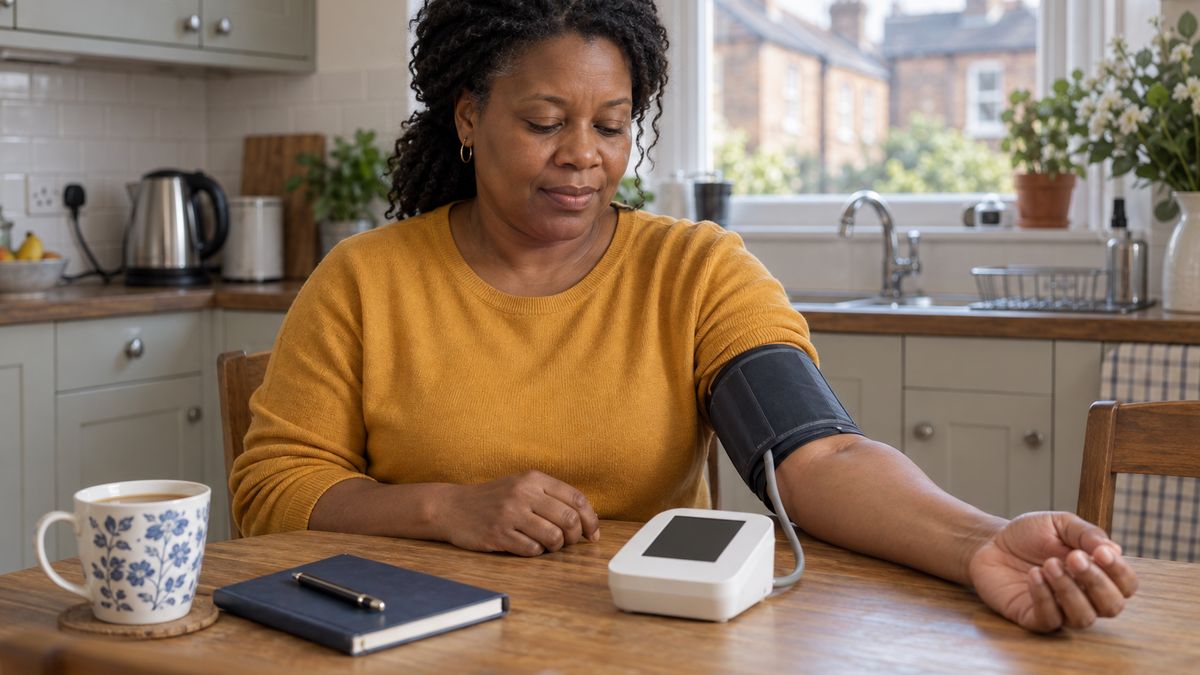
A one-off reading at the surgery does not tell us that much. I recommend buying a home blood pressure monitor and checking yourself every six months to a year. Here is how:
- Sit down, rest quietly for a few minutes first and support your arm.
- Take two readings, at least one minute apart.
- Do this morning and evening for at least four days, ideally seven.
- Ignore the first day's readings and take the average of all the rest. Do not just record the lowest reading.
Why hypertension is different in Black people
There are some important peculiarities of high blood pressure in Black people:
- It is more common. A higher percentage of Black people have high blood pressure, and genetic factors may play a role.
- We are more sensitive to salt. This is really important. Salt, and the sodium and monosodium glutamate in the seasonings and food enhancers used in African, Caribbean and Black communities generally, push our average blood pressure higher.
- We respond better to certain medications, particularly calcium channel blockers and diuretics.
- Treated but uncontrolled hypertension is more common. Many Black people are on medication but still not in the target range.
So what is the target? If you have high blood pressure and are on treatment, we want your home readings to be below 135 systolic and below 85 diastolic, so 134/84 or less. This is the target for adults under 80; if you are 80 or over, the home target is below 145/85. Anything higher means your treatment is not yet enough, and you need additional lifestyle changes, additional medication, or both. Some would argue for even lower targets in Black people, given how high our risk is.
The silent killer
High blood pressure is known as the silent killer because it usually has no symptoms. But very high blood pressure can cause headaches, visual disturbances, shortness of breath, nosebleeds, dizziness, chest pain and fatigue. If you start having nosebleeds or a bleed in your eye when you have not had them before, check your blood pressure. These symptoms are not specific, but if you have them, or just feel generally unwell, check your blood pressure. You might be like me.
Left untreated for a long time, hypertension causes problems all over the body:
- Damage to the eyes, which can even lead to blindness
- Poor blood flow to the legs, causing calf pain (claudication)
- Stroke, which can cause disability or death
- Kidney failure, which can leave people needing dialysis or a transplant
- Heart failure and heart attack
- Vascular dementia, caused by damage to the small vessels in the brain
- Sexual dysfunction, from poor blood flow
That is why it is so important to catch it early. For most people, hypertension is completely treatable with lifestyle changes, medication, or both.
Lifestyle changes that lower blood pressure
Reduce your salt. For the Black population, I cannot overstate this. I know we like flavour and do not want bland food, but salt is not our friend, and it drives so much of the hypertension in our community. Try low-salt alternatives, in moderation, and switch to zero-salt or low-salt stock cubes, because many of the stock cubes and mixed seasonings we use in African and Caribbean cooking are very high in salt and MSG.
Move more. Regular aerobic exercise, the kind that gets your heart pumping, lowers blood pressure. Build it into your life: sit less and walk more, even if it is 10, 20 or 30 minutes a day. Run, swim, join a class or play a sport if you can.
Drink less alcohol. Stay within 14 units a week and no more.
Eat well and manage your weight. Being heavier increases both your risk and the impact of high blood pressure, so losing weight can make a real difference. Healthy food does not have to be expensive, and there are many ideas online for eating well on a budget. Aim for a balanced diet with fruit, vegetables, protein and carbohydrates, and watch your portion sizes.
Stop smoking. It is bad for your blood pressure and makes every complication worse.
What is in the medication toolbox
When lifestyle changes are not enough, we have several types of medication:
- Calcium channel blockers, such as amlodipine or felodipine, are usually first in line in the UK for Black patients who do not have type 2 diabetes. Amlodipine is what I take. They can cause ankle swelling, and if that is intolerable, you can switch.
- Diuretics, such as indapamide (the preferred choice in the UK for people starting now; people already stable on bendroflumethiazide can usually stay on it), help the body get rid of water and salt. They work well for Black people and are widely used in Africa and the Caribbean. They make you pass urine more, so take them earlier in the day.
- ACE inhibitors, such as ramipril or lisinopril, lower blood pressure and protect the kidneys, and are used after heart problems or in heart failure. They can cause a cough.
- Angiotensin II receptor blockers (ARBs), such as losartan or candesartan. For people of Black African or African-Caribbean family origin, UK guidance recommends considering an ARB in preference to an ACE inhibitor, for example if you also have type 2 diabetes or need a second medicine.
- Beta blockers, such as atenolol or bisoprolol, are usually used in combination, especially with heart disease or heart failure.
Many people need two, three or even four medications to reach target, and reaching target is what matters. Do not say, "I don't want any more tablets." If your blood pressure is not controlled, you are still at risk of the complications. I am begging you: take the medication prescribed for you, and listen to your clinician.
Take control of your blood pressure
- If you do not have high blood pressure, check it every six months to a year from the age of 40, or younger if you are Black with a family history.
- If you are diagnosed, stick to your treatment plan and tell your clinician about any side effects so they can adjust it. Do not just stop your tablets at home.
- Attend your reviews, at least once a year, and do seven days of home readings beforehand to take with you.
- Know when to call your doctor, and keep up with your yearly kidney blood tests.
Knowing your numbers puts you in control. Please share this with your family, because catching high blood pressure early could save someone you love.
Watch the original HEAL talk
Watch Dr Itunuoluwa Johnson-Sogbetun's HEAL for Black People talk on YouTube (18:44)
Frequently asked questions
In the UK, a clinic reading of 140/90 or higher, or a home reading of 135/85 or higher, may mean high blood pressure. A reading below 120/80 is generally considered healthy. A single reading is not enough for a diagnosis, so your GP will usually ask you to check at home or wear a 24-hour monitor.
Sit quietly for a few minutes, then take two readings at least one minute apart. Do this morning and evening for at least four days, ideally seven. Ignore the first day's readings and work out the average of all the others. Share the results with your GP or practice nurse, rather than choosing the lowest numbers.
UK guidance says adults of Black African or African-Caribbean family origin without type 2 diabetes should usually start with a calcium channel blocker, such as amlodipine. If an ACE inhibitor or similar drug is needed, an angiotensin receptor blocker such as losartan is preferred. Many people need two or more medicines, so keep taking them.
If you are under 80, NICE advises aiming for a clinic reading below 140/90, or an average home reading below 135/85. If you are 80 or over, the targets are below 150/90 in clinic and below 145/85 at home. Your doctor may set a different target if you have diabetes or kidney disease.
- Hypertension in adults: diagnosis and management (NG136). NICE, 2019, updated since
- High blood pressure (hypertension). NHS, last reviewed 19 July 2024
- Blood pressure test. NHS, last reviewed 25 November 2025
- Understanding Blood Pressure Readings. American Heart Association, last reviewed 14 August 2025
- High blood pressure (hypertension): causes. NHS, last reviewed 19 July 2024
- Alcohol units. NHS, last reviewed 27 August 2024
- Salt: the facts. NHS, last reviewed 17 April 2023
Read next in the HEAL series
All articles in the HEAL series Vascular health
The hidden weight on Black hearts
Why high blood pressure, stroke and type 2 diabetes hit Black communities harder, and the ABCDE lifestyle plan a UK GP uses to protect your heart.
Dr Izie Allison-OmoruyiVideo length 6:24 Men's health
Brothers, it is time we talked
1 in 4 Black men will get prostate cancer. A UK GP explains PSA testing from 45, enlarged prostate, erectile problems and when to see your GP.
Dr Derek Adu-SarkodieVideo length 16:48 Empower Her
Black women and menopause
Black women often reach menopause earlier and have symptoms for longer. A GP and British Menopause Society member explains symptoms, HRT and risks.
Dr Itunuoluwa Johnson-SogbetunVideo length 1:19:12