Men's health: Brothers, it is time we talked
By Dr Derek Adu-Sarkodie, GP · Module content by Dr Olusina Ajidahun
9 min read

In short: About 1 in 4 Black men in the UK will get prostate cancer, double the risk of men overall, and they are more likely to be diagnosed late. Black men aged 45 and over should talk to their GP about PSA testing, and any change in urination, erections or testicles should be checked early.
Key takeaways
- There is no national prostate screening programme for Black men, but you have the right to ask your GP about a PSA test.
- An enlarged prostate is common after 50 and treatable with lifestyle changes, medicines or surgery.
- Erectile problems can be an early warning sign of heart disease or diabetes.
- Stigma and expectations of masculinity delay care; talking openly and supporting each other saves lives.
I am a GP in the North West of England, a lead GP in my practice and a regional clinical lead for workforce and education. I have a real passion for teaching, and I am passionate about giving people the information they need to make better choices about their health. That is why I wanted to be part of HEAL.
Black men face a range of health issues, including prostate problems, erectile dysfunction and premature ejaculation. These affect our physical and mental wellbeing alike. Many of us are not sure what to look out for, and we tend to see a healthcare professional later than we should. The disparities we see in prostate cancer and sexual health stem from genetics, access to care and cultural influences. So in this piece, I want to change that, and I want to keep coming back to one theme: how our mental health is woven through all of it.
Getting to know your prostate
The prostate is a small, almond-shaped gland that sits just beneath the bladder. It produces fluids that enrich semen. The tube that carries urine out of the body, the urethra, runs straight through the middle of it, which is why prostate problems so often show up as urinary problems. Three main things can go wrong:
- Benign prostatic enlargement (BPE): the prostate grows larger.
- Prostatitis: the prostate becomes infected or inflamed.
- Prostate cancer.
Benign prostatic enlargement
As men get older, the prostate often gets bigger and presses on the urethra. Many men over 50 have an enlarged prostate, and about 1 in 3 men over 50 have urinary symptoms. One large US study found the risk of BPE was about 41% higher in Black men than in white men, although other studies have not found a difference.
Symptoms include difficulty passing urine, straining, a weak stream, and waking several times a night to go. Risk factors include age, a family history (if your father or other relatives have had it, you are more likely to get it too), changes in male hormones, and some lifestyle factors.
Treating BPE. I am always an advocate of lifestyle changes first:
- Cut down on caffeine and alcohol, which irritate the bladder and send you to the toilet more often.
- Drink less in the evening, so you are not getting up as much at night.
If that is not enough, medication can help. Alpha blockers, such as tamsulosin, relax the smooth muscle around the urethra so urine flows more easily. 5-alpha reductase inhibitors, such as finasteride, shrink the prostate so it presses less on the urethra. And surgery is an option: in a transurethral resection of the prostate (TURP), a urology surgeon passes a scope up the urethra and removes part of the prostate to relieve the symptoms.
Prostate cancer: one in four
This is a condition that affects so many people, including members of my own family. One in four Black men will develop prostate cancer during their lifetime, compared with around one in eight men in the UK overall.
Black men are also more likely to be diagnosed at a more advanced stage, and the later a cancer is found, the harder it is to treat. Why are we at greater risk?
- Genetics. Genes may play a part, although researchers are still working out why Black men have a higher risk, and some of the gap in outcomes comes from later diagnosis and unequal access to treatment.
- The clinical trial gap. We are underrepresented in clinical trials, which really hinders specific, tailored treatment and research.
- Access. Limited access to care and screening adds to the disparity.
Other risk factors include age, family history, your genes, and diet and lifestyle, particularly an inactive lifestyle and a diet high in fat.
Testing. The main test is a blood test called PSA (prostate-specific antigen). No test is perfect, so it is used alongside an examination. If you are an older Black man with urinary symptoms, your GP will usually examine you and arrange the blood test. If you are a Black man aged 45 or over, talk to your GP about your risk and the PSA test. There is no national screening programme for Black men, but you have the right to ask, and your GP will talk you through the pros and cons.
Treatment depends on how aggressive the cancer is. Prostate cancer is often slow-growing, so for lower-risk forms, the urology team may recommend active surveillance, with regular PSA tests, scans and sometimes biopsies, or, for some older men, watchful waiting. Cancers that need treatment may be treated with surgery, radiotherapy or hormone therapy, and chemotherapy is used mainly for advanced cancer, sometimes in combination.
Erectile dysfunction: nothing to be ashamed of
Erectile dysfunction means having problems getting, keeping or sustaining an erection. It can have a real impact on a man's physical and psychological health. I like to break the causes into two groups:
- Psychological causes: anxiety, depression and stress.
- Physical causes: high blood pressure, diabetes, some medications (including a common group of antidepressants called SSRIs), alcohol, smoking, and low levels of male hormones.
Because physical causes such as diabetes and heart disease risk can show up this way, finding the underlying cause matters. Your doctor may check your blood sugar, cholesterol and testosterone levels.
The empowering news is that there is a lot you can do. Treatment starts with addressing the underlying cause, and counselling can be very effective. A healthy diet, cutting back on alcohol and stopping smoking can make a real difference to symptoms. Medications that increase blood flow to the penis, such as sildenafil, may be used. Other options include vacuum pumps and injections, and some private or specialist clinics offer low-intensity shockwave therapy, although this is not routinely available on the NHS and the evidence is still developing.
Testicular health: know what is normal for you
Every man should examine his testicles regularly so that he knows what is normal for him. That way, if something changes, you will notice it early and can get it checked. If you find anything unusual, see your doctor.
The pressures that keep us quiet
Across all of these conditions, Black men face specific challenges and psychological struggles. There is stigma. There are expectations of masculinity that make it hard to admit something is wrong or to ask for help. There are anxiety and depression, and for some, communication barriers when they do see a clinician. All of this delays us from getting the care we need.
What will make a difference
- Culturally sensitive care: mental health services tailored to our cultural needs.
- Open dialogue: we need to talk about health in our communities, which is exactly why sessions like HEAL exist.
- Better access: within the NHS and beyond, we need better access to healthcare, including mental healthcare, not just physical care.
- Peer support: we can create support networks, be brothers to each other through these difficulties, share experiences, and lean on each other.
Black men's health spans many areas: prostate health, sexual health and mental health among them. If we open up the conversation, support one another and overcome the stigma around seeking help, and if care becomes more culturally competent and easier to access, regular checks can help us take charge of our health before problems become serious.
When to see your GP
Book an appointment if you notice any of the following:
- Difficulty passing urine, straining, or a weak stream
- Waking more than once a night to pass urine
- Blood in your urine or semen
- Problems getting or keeping an erection
- A lump, swelling or change in your testicles
- Pain in your lower back, hips or pelvis that does not settle
- Low mood, anxiety or stress that is affecting your life
I cover many of these topics in more depth on my YouTube channel, AduMed, if you would like to learn more.
If something has changed, speak to your GP. It is not weakness. It is looking after yourself and the people who depend on you.
Watch the original HEAL talk
Watch Dr Derek Adu-Sarkodie's HEAL for Black People talk on YouTube (16:48)
Frequently asked questions
Yes. Around 1 in 4 Black men in the UK will get prostate cancer in their lifetime, about double the risk of other men, where the figure is around 1 in 8. Black men are also more likely to be diagnosed at a later stage. Black men aged 45 or over should talk to their GP about their risk.
Yes, you can ask your GP. There is no national screening programme, except planned screening for men with a BRCA2 gene change and a family history of cancer. Your GP will explain the benefits and downsides, such as false alarms and finding slow cancers that would never cause harm, so you can decide together.
An enlarged prostate (benign prostatic enlargement) is a common, non-cancerous growth that can squeeze the urethra and cause a weak flow or frequent peeing at night. Prostate cancer often causes no symptoms early on. The symptoms can overlap, so any change in how you pee should be checked by your GP.
Erectile dysfunction can be caused by stress, anxiety or depression, or by physical problems such as high blood pressure, diabetes, high cholesterol, smoking, alcohol or some medicines. It can be an early sign of heart disease, so see your GP if it keeps happening. Treatments include lifestyle changes, counselling and tablets such as sildenafil.
- Enlarged prostate, NHS, last reviewed 8 April 2025
- Enlarged prostate, Prostate Cancer UK, current page
- Black men and prostate cancer, Prostate Cancer UK, current page
- "The odds are stacked against you": Black men more likely to be diagnosed at later stage, Prostate Cancer UK, January 2025
- UK NSC recommends prostate cancer screening for men with a BRCA2 gene change and family history of cancer, Cancer Research UK news, May 2026
- Prostate cancer: treatment, NHS, current page
- Erectile dysfunction (impotence), NHS, current page
Read next in the HEAL series
All articles in the HEAL series Cancer risk
Cancer does not have to be more common to be more deadly
Black people in England are more often diagnosed late with breast and other cancers. A UK GP explains the warning signs and screening that save lives.
Dr Itunuoluwa Johnson-SogbetunVideo length 13:27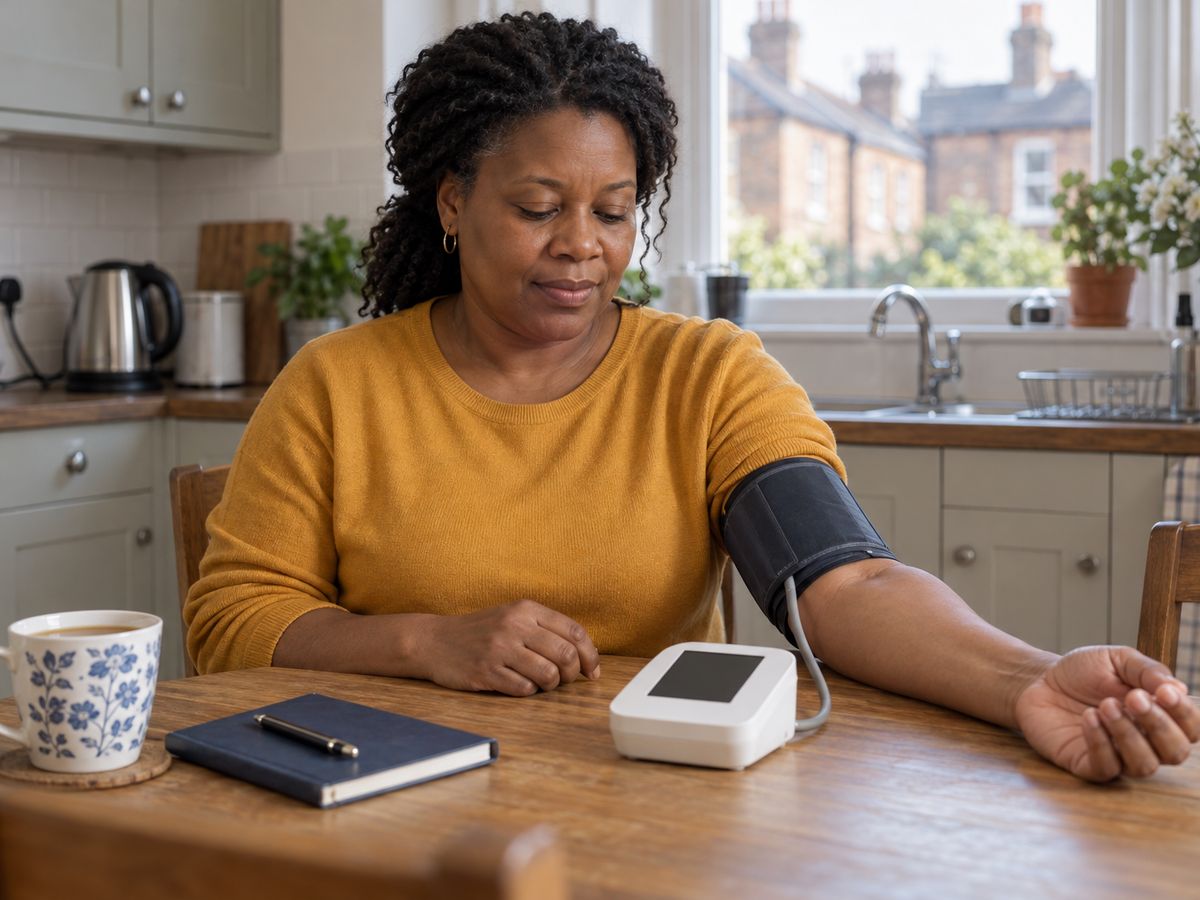 Special feature
Hypertension works differently in Black bodies
A GP diagnosed with hypertension at 27 explains UK blood pressure targets, how to check at home and which medicines work best for Black people.
Dr Itunuoluwa Johnson-SogbetunVideo length 18:44 Conclusion
From struggles to solutions
Practical steps to get heard in the NHS, plus the BRIGHT CARE framework for clinicians, from UK GP and health educator Dr Tosin Ajayi-Sotubo.
Dr Tosin Ajayi-SotuboVideo length 15:16