Introduction: Why we built HEAL
By Dr Itunuoluwa Johnson-Sogbetun (Dr Sho), General Practitioner
8 min read
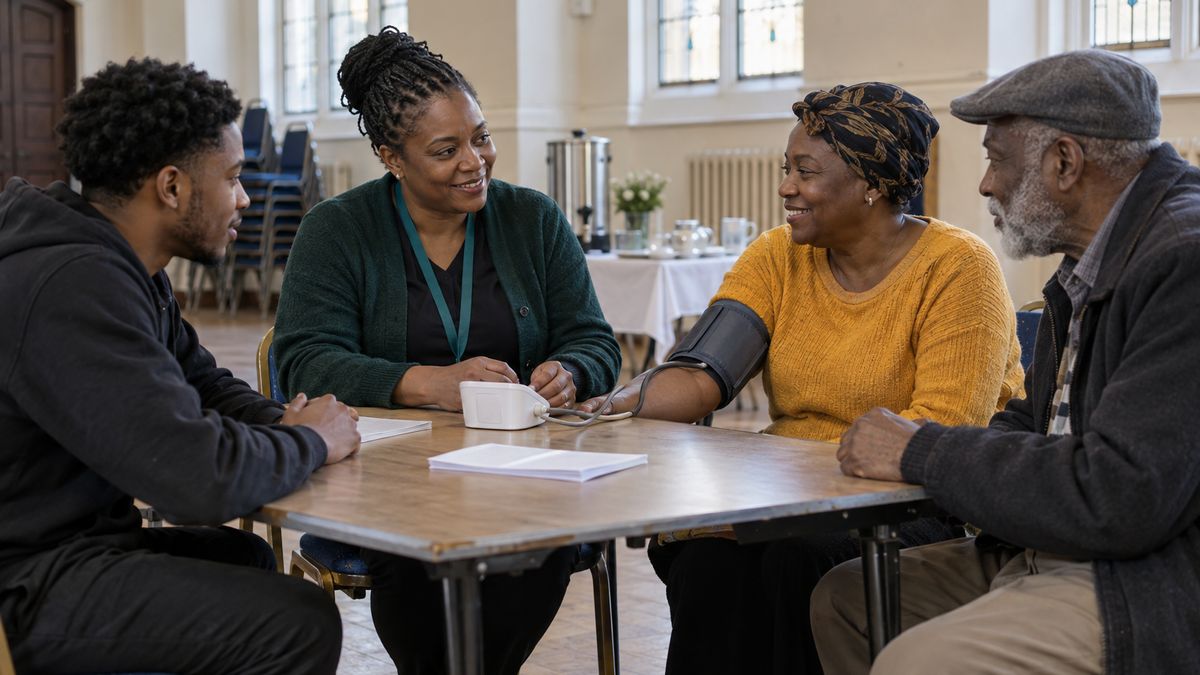
In short: Black people in the UK and around the world face avoidable gaps in health, from maternal deaths to high blood pressure, driven by racism, deprivation and barriers to care. HEAL is a series by UK doctors that sets out those gaps condition by condition, because education is one of the fastest ways to start closing them.
Key takeaways
- In the UK, Black women are 2.7 times more likely than white women to die during pregnancy or in the six weeks after birth (MBRRACE-UK, 2022 to 2024).
- High blood pressure is more common in people of Black African and Black Caribbean heritage, and it often starts younger.
- The barriers are strikingly similar across continents: distance, cost, overstretched services, poor communication, stigma and inherited risk.
- Health literacy is one of the most fixable drivers of inequity, which is why this series exists.
Health equity for Black people is the urgent health issue of our time. I do not say that lightly. I say it because of what the numbers show, and because of the people I have met behind those numbers.
HEAL stands for Health Equity and Advocacy Learning. We created it for two audiences at once: for patients and the public, so that Black people can understand the conditions that affect us most, and for health professionals, so that they can understand why those conditions affect us differently. Across this series you will hear from doctors who see these issues every day. This piece is where it all begins.
Two stories
Let me start with Amina. Amina is a young woman in a remote African village, pregnant with twins. She has limited access to healthcare and to trained professionals, and when she needs help, poor roads and scarce transport delay her journey to hospital. When she finally arrives, the hospital is overwhelmed and the wait is long. She needs surgery, and her family rushes to gather the money, but by then it is too late.
Amina's uterus ruptures. She bleeds heavily, loses her twins, and loses her future fertility. Because she did not receive proper care in time, she also develops a vesicovaginal fistula, an abnormal channel between the bladder and the vagina that leaves her constantly leaking urine. The physical distress leads to social isolation, and the harm keeps compounding.
Amina is a case scenario, but she is not invented from nothing. I met women like her during my placements as a medical student many years ago. Hers is, sadly, a common story, and even here in the West we see similar outcomes for Black women. They are rarer, but they still happen.
Now Jamal. Jamal is a young Jamaican man who has moved to a bustling city in the United States to build a new life. He struggles with cultural adjustment and lives with a distant relative he does not get along with, and before long he is isolated, anxious and depressed. Cultural stigma around mental health stops him from asking for help. Like many immigrants, he juggles two jobs, construction worker by day and night cleaner, saving to further his education.
Then the headaches start. Jamal does not know it, but they are caused by high blood pressure, which is more common in Black people and often starts earlier. When he finally saves enough to see a doctor, the consultation is hampered by communication problems because of his accent, and he leaves more demoralised than before. He is also afraid of what a mental health diagnosis might do to his family's reputation.
Jamal could just as easily be an African or Caribbean immigrant in the United Kingdom. His story shows why we must break down the cultural barriers and stigma around mental health, whether they come from moving to a new country or from the generational and heritage trauma so many Black people carry. Open, honest conversations are what people like Jamal need in order to seek help.
What Amina and Jamal have in common
Amina and Jamal live on different continents, but the barriers they face are strikingly similar: distance from care, cost, overstretched services, poor communication, isolation, stigma, and an inherited risk that nobody warned them about. None of these barriers is a personal failing. Each one is something a health system, a community, or a well-informed individual can do something about.
Why education matters so much
There are many reasons for the health inequities Black people suffer, including structural racism, and many of them we are working to eradicate or improve. But compared with some of the more systemic issues, one thing is relatively easy to fix: education.
Education and health literacy can transform the health challenges facing Africa and the Black diaspora. Knowledge dispels myths, empowers communities and improves outcomes. Knowing the data matters too, because it shows us clearly where the disparities lie and what we are up against.
What the numbers tell us
In sub-Saharan Africa, life expectancy is around 63 years, compared with a global average of about 73. I want you to take a moment and sit with that gap: ten years of life. Across the region, around 47 babies in every 1,000 die before their first birthday, and in some countries the figure is far higher. People are dying younger, and unnecessarily, because of health inequity.
We see the same pattern elsewhere. In the United States, Black Americans live more than four years less than white Americans, and Black infants die at much higher rates than white infants. In the UK, official life expectancy figures by ethnicity are not reliable enough to quote, but the gaps in specific conditions are clear. The latest national enquiry into maternal deaths found that Black women are 2.7 times more likely than white women to die during pregnancy or in the six weeks after giving birth.
The African diaspora stretches well beyond these countries, into the Caribbean, South America, Canada, Europe and parts of Asia and Australia, and the disparities follow it everywhere:
- The Caribbean: diabetes, hypertension and heart disease are among the leading causes of illness and death.
- Brazil: the Black population has higher maternal and infant mortality and a lower life expectancy.
- Europe: in countries such as France and the Netherlands, Black people experience discrimination in healthcare, poorer care, and higher rates of mental health conditions, especially immigrants who feel isolated and poorly integrated.
- Africa: conditions such as diabetes, hypertension and heart disease are becoming more common too.
What HEAL covers
We cannot cover every condition where inequities exist, so we have focused on the areas where the disparities are most dramatic:
- Vascular health: heart disease, diabetes, stroke and the hypertension that underpins so many of the biggest gaps, including the role of systemic, inherited and generational stress.
- Women's health: infertility, PMOS (formerly PCOS), endometriosis, fibroids, perimenopause and menopause.
- Cancer risk: why Black people are more likely to die from breast and prostate cancer, more likely to develop them earlier, and more likely to have aggressive bowel cancer, plus prevention and screening.
- Skin health: eczema, seborrhoeic dermatitis, acne and skin cancer, and how to care for Black skin.
- Muscular and joint health: arthritis, autoimmune disease, chronic stress and the role of vitamin D.
- Men's health: prostate enlargement, prostate cancer, erectile dysfunction, and the barriers Black men face in seeking help.
- Maternal, perinatal and child health: pregnancy, infant mortality, childhood conditions such as asthma, and vaccine hesitancy.
My ask of you
Education is vital. It raises awareness and urgency, mobilises us, and empowers us to take preventive action, because prevention really is better than cure. It supports early diagnosis, strengthens us as a community, and helps us begin to tackle the wider social conditions that shape our health. Above all, it unites our efforts.
So please read these pieces, share them within your networks, and use what you learn: to ask better questions, to push for early diagnosis, and to look after the people you love.
If you are a health professional reading this, my ask is slightly different: look for these patterns in your own practice. Notice who waits longest, who is not being understood, and whose symptoms are being put down to something else. And to everyone, please send us your feedback so that we can keep improving this work.
We are doing this because Black lives matter, and because health equity for Black people cannot wait.
Watch the original HEAL talk
Watch Dr Itunuoluwa Johnson-Sogbetun's HEAL for Black People talk on YouTube (13:54)
Frequently asked questions
Health equity means everyone has a fair chance to be as healthy as possible, whatever their ethnicity, income or where they live. Health inequity describes differences in health that are avoidable and unfair, such as poorer access to care or later diagnosis. In the UK, Black people face gaps in areas like maternal health and high blood pressure.
Yes. The latest MBRRACE-UK report, covering 2022 to 2024, found that Black women were 2.7 times more likely than white women to die during pregnancy or up to six weeks after birth. Maternal death is still rare, but if something feels wrong during pregnancy, contact your midwife or maternity unit straight away.
Yes. The NHS says people of Black African or Black Caribbean background are at higher risk of high blood pressure. It often has no symptoms, so the only way to know is to have it checked. Adults over 40 should have a check at least every five years, and more often if at higher risk.
HEAL stands for Health Equity and Advocacy Learning. It is a series written by UK doctors that explains conditions affecting Black people more often or more severely, such as high blood pressure, cancer and maternal health problems. It is written for patients and the public, and for health professionals who want to understand why these differences exist.
- Life expectancy at birth, total (years): Sub-Saharan Africa and World. World Bank World Development Indicators (via FRED), data to 2024, updated June 2026
- Mortality rate, infant (per 1,000 live births): Sub-Saharan Africa. World Bank, data to 2024
- Racial Disparities in Life Expectancy. KFF, March 2026
- Saving Lives, Improving Mothers' Care 2026 (maternal deaths 2022 to 24). MBRRACE-UK / NPEU, University of Oxford, September 2026
- Ethnic inequalities in mortality rates and life expectancy in England and Wales: why we should treat experimental statistics with caution. NHS Race and Health Observatory, July 2021
- High blood pressure (hypertension): causes. NHS, last reviewed 19 July 2024
Read next in the HEAL series
All articles in the HEAL series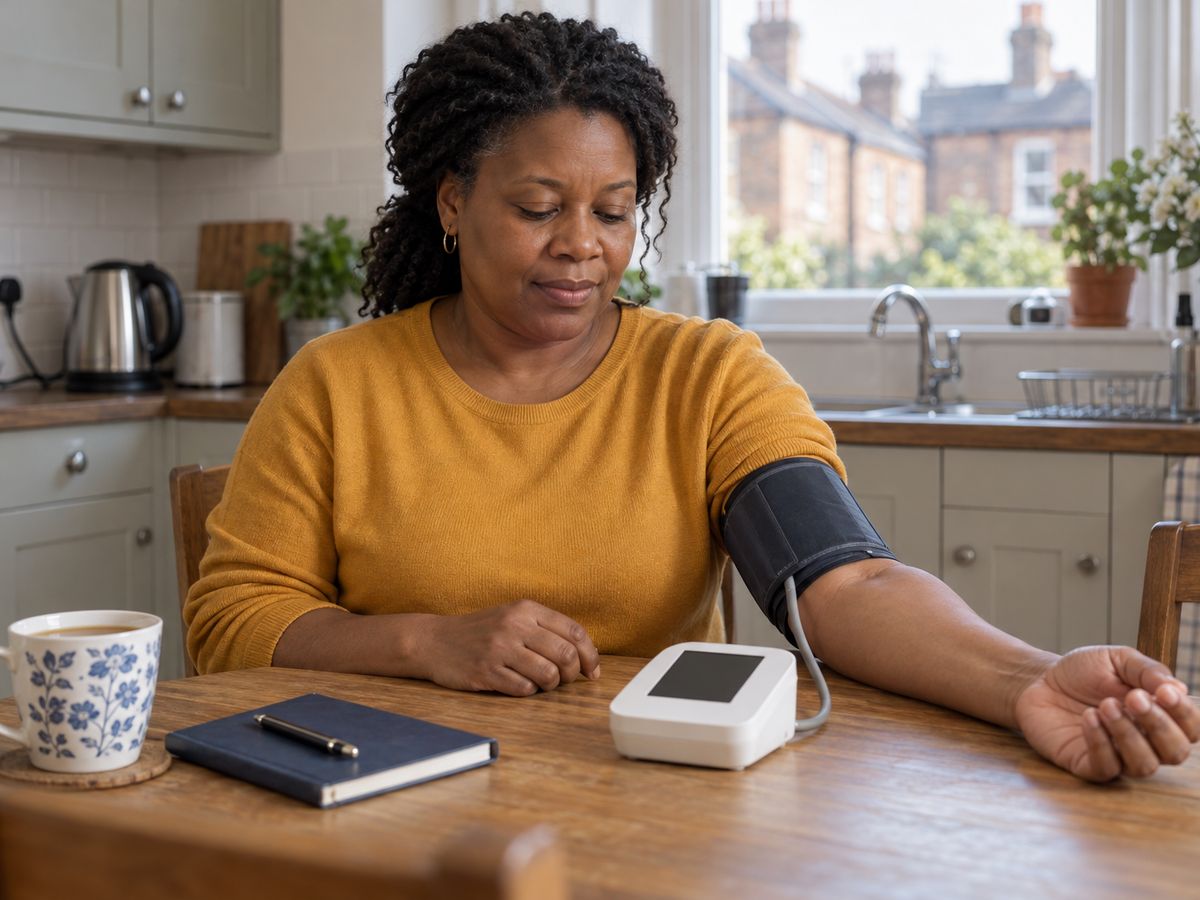 Special feature
Hypertension works differently in Black bodies
A GP diagnosed with hypertension at 27 explains UK blood pressure targets, how to check at home and which medicines work best for Black people.
Dr Itunuoluwa Johnson-SogbetunVideo length 18:44 Vascular health
The hidden weight on Black hearts
Why high blood pressure, stroke and type 2 diabetes hit Black communities harder, and the ABCDE lifestyle plan a UK GP uses to protect your heart.
Dr Izie Allison-OmoruyiVideo length 6:24 Conclusion
From struggles to solutions
Practical steps to get heard in the NHS, plus the BRIGHT CARE framework for clinicians, from UK GP and health educator Dr Tosin Ajayi-Sotubo.
Dr Tosin Ajayi-SotuboVideo length 15:16